Showing posts with label Greed. Show all posts

Tuesday, October 15, 2013

Communal Forces


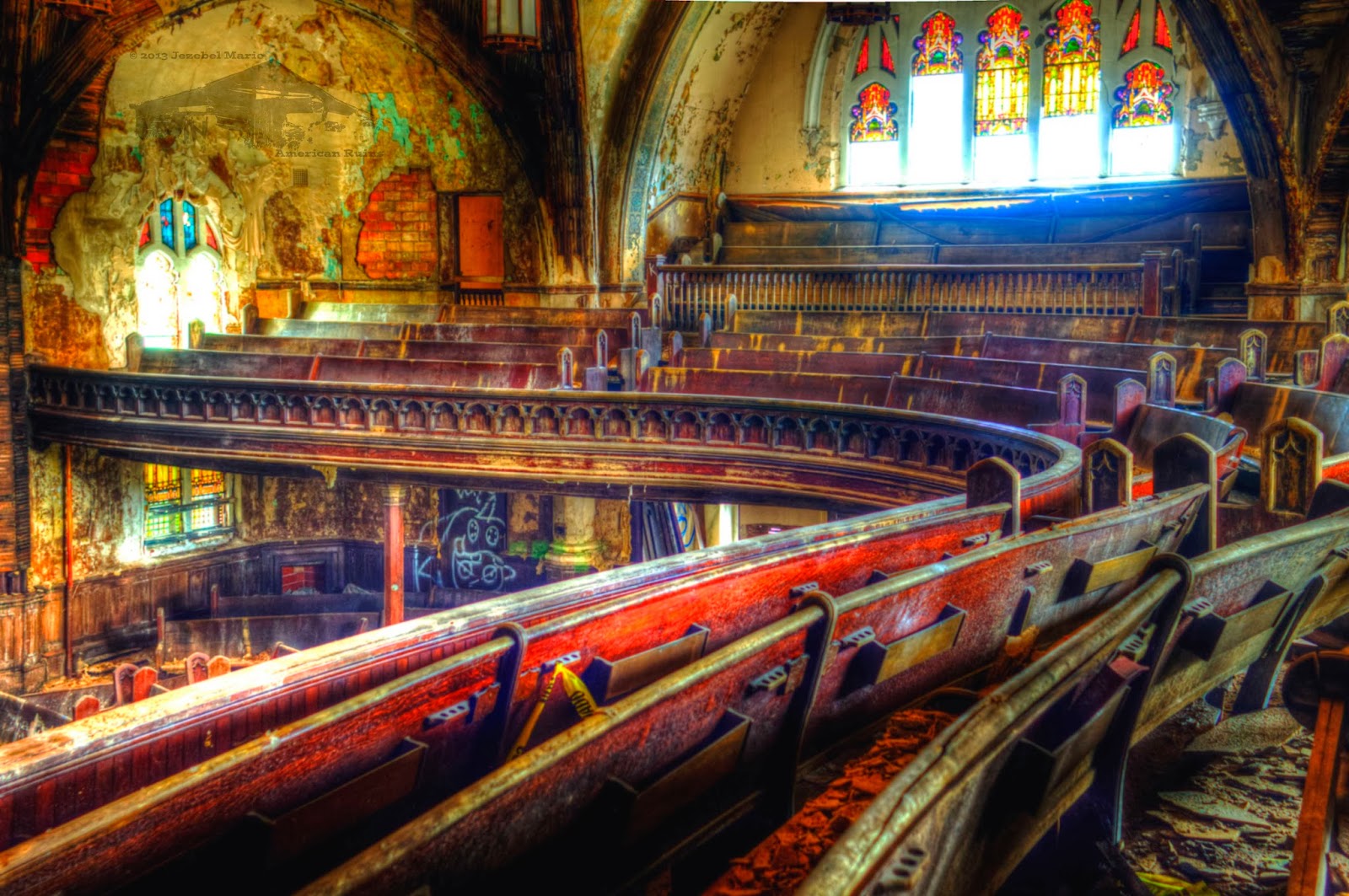
 My new happy place is at church. Not the defined rites and rituals and finery that constitutes church for some, but the ruins of such pageantry. Not a specific building, like the Nazarene Church on NW 39th St of my forebears, but any carapace of character quietly fading into the urban landscape. Dulling beauty.


Whenever we hit up a new town we always search out churches. Pillars of communities, touching so many souls across multiple generations, their residual energy is palpable and exhillirating.

This summer has seen a number of miles chocked up in the AR mobile. From Mobile to Monroe, through St. Louis and Detroit. We visited grand cathedrals and road side chapels. In the Carolinian mountains, along the battered Gulf coasts, on the muddy banks of the Mississippi, everywhere we traveled we found monuments from mankind to their master. Massive architectural icons lining Woodward Ave, Clapboard steeple topped sharecropper churches alongside forgotten county roads in Alabama, modest inner-city structures re-purposed before abandonment and succumbs to decay in all metropolitan areas.

A quiet spot in front of St. Mary's in Detroit, MI


We're tourists, so we should travel. Roaming the ruins of Detroit we found community in  isolation as multiple paths converged one summer Saturday.


The craftsmanship, the thoughtfulness and expression in the design of these buildings is renowned. Their state of neglect and disrepair nearly as so.

The Sherpa is not getting any younger, I'll never see Langston Hughes read in Harlem nor the Grateful Dead play the EastTown, my hope for tickets to a reunion tour by The Ramones has waned. Every day the news brings word another of these great buildings has had demolition permits issued.


The state of the motor city is not lost on us, the depression there is a harbinger of the troubles to plague us all if we allow capitalism and cronyism to run rampant. As America has shown wont to do.


The majority of folks left in Detroit are too poor of resources to move, and sentenced to the fate of the city. Small pockets of vibrant, metropolitan life populate an apocalyptic landscape of razed and overgrown lots, derelict ruins of yesteryear's industry, the sad, gaudy lights and colors of Payday Loan brokers like beacons in seas of broken and falling homes.

 The place is an explorers paradise though, visions of the history and lives that passed through the city, when crowned the nation as a shinier jewel, dance everywhere one goes in the motor city. Derelict and weathered buildings and lands narrate historic times higher on the hog that is the American economy.

Landmarks, icons, monuments to man's love of his creator. These churches sit silently now, deterioration hurried by water and scrappers and vandals.

 Architectural wonders.


 Engineering curiosities.


Internet precursors.


 All wasting assunder.

 Along with their facilities.


 And parsonages.


 And ephemera.


  Amazing and ornate details.


Instruments and stained glass creations await desecration.
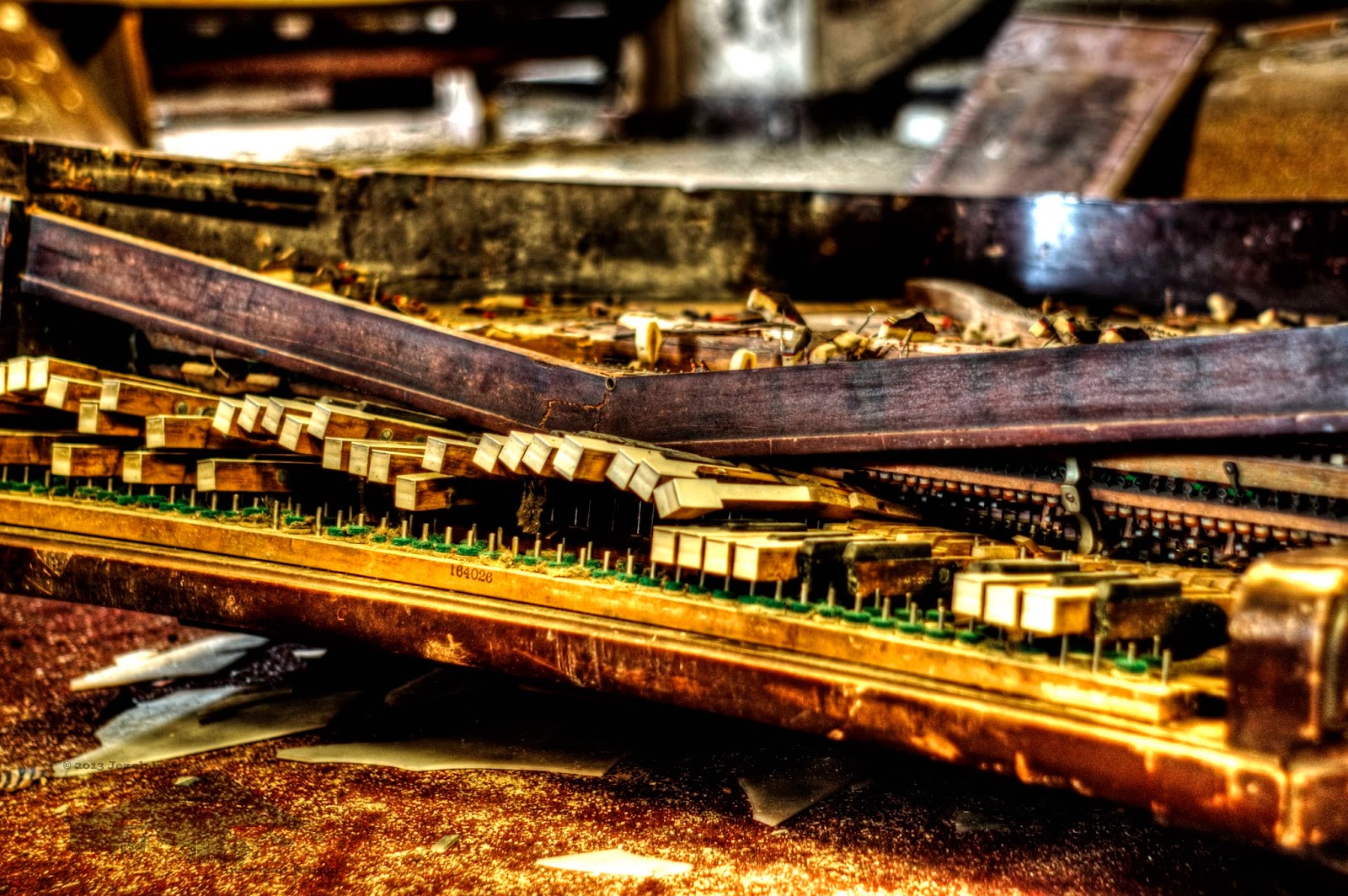


Or redemption.


All standing in defiance of abandonment and weather, glorious ruins from substantive times and materials welcome the explorer.


We'll look deeper at Detroit and the histories of these and other abandoned spaces around the city. Until next time, stay off the radar!


Saturday, January 26, 2013

Economic Forces


An April 1984 F4 tornado tears through Mannford, OK
 I grew up in a dead town. We all thought it was dying, but having been back once a decade or so since Old Man and Momma Jones took down the shingle and meandered us westward; I can see it was dead when the water slide closed down. Those left either never wanted to be in town anyway, or stumble around zombie-fied recalling the last time the Pirates made a run at the Oklahoma State 1A High-School championship, as a measure of persistent relevance.

They mean football, but no team had been to state in anything except marching band for decades. Held together with sludge leftovers of the oil boom, the original town site flooded by a Corps of Engineers dam on the Arkansas river west of Tulsa. The ground so polluted, in a pre-EPA America even, recourse was burial at minimum 15 feet underwater. I thought of it as a suburban experience, since Old Man Jones commuted to Tulsa. Later I met true suburbanites and learned the equine facilities in our back pasture, let alone the back pasture, disqualified me from the normal perception of suburban. Sparse population-density tends a balance that keeps most of the residential and commercial space occupied, each spring tornado season erases another swath of town, only the necessary buildings get recreated.

Inside Gary's Union Station
 This was never an economic hub, like the refinery town where my grandparents lived. Though it still had some vibrance and character when I was young, the brick-streets of Ponca City continue to deteriorate and remain underfunded now that I'm, ahem, less young. As time wears on the sheen fades, and facades begin to dull.

 The Continental Oil Company didn't hold a candle to the United States Steel Corporation's testament to civilization plotted out of northwest Indiana. Named in honor of their founder Elbert Henry Gary, a capitalist mogul of the first order, having coordinated the likes of JP Morgan, A. Carnegie, and C. Schwab to launch the steel company and the city where its labor force would flourish.


Union Station, Gary, Indiana, where the trains no longer so much as slow down